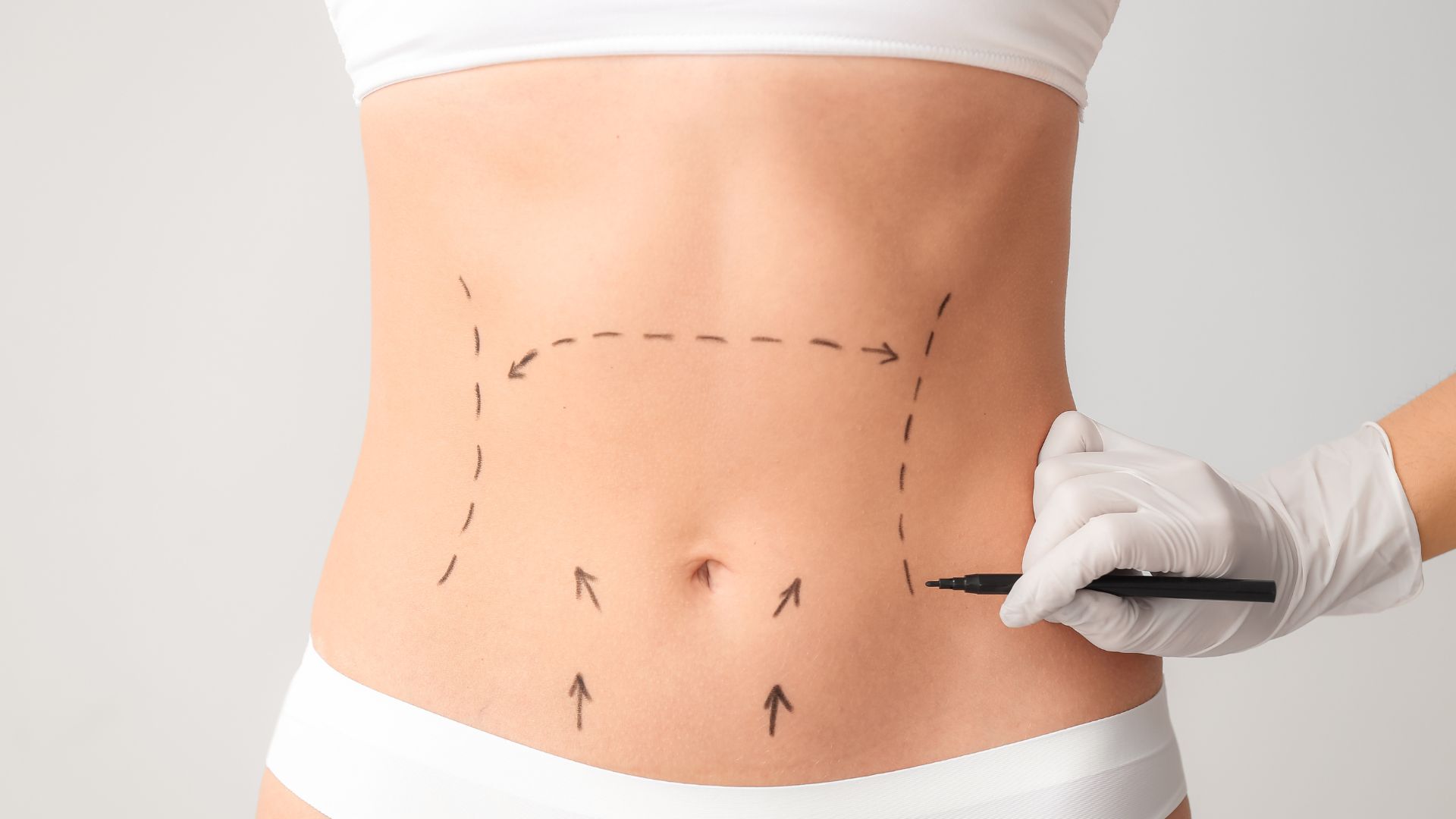
You’ve seen the photos. The dramatic side-by-side comparisons, the smoothed-out silhouettes, the disappearing love handles. And now you’re wondering if those results are actually typical or just the best-case scenarios a clinic handpicked for marketing. Honestly, that’s a fair thing to wonder.
Flankplasty is a surgical procedure designed to reshape the flank area — that stretch of soft tissue along your sides and lower back that sits stubbornly between your waistband and your ribcage. And while the before-and-after results can be genuinely striking, the full picture is a little more nuanced than any gallery of photos can show.
Let’s walk through what actually changes, when it changes, and what factors will quietly shape how your outcome turns out.
So, What Exactly Gets Addressed?
Before we talk about results, it helps to understand what a flankplasty actually does. The procedure targets excess skin and fat on the flanks — that area most people refer to as love handles or the “muffin top” zone. A surgeon removes a wedge of tissue, tightens the underlying structures if needed, and repositions the remaining skin for a smoother contour.
Think of it less like sculpting clay and more like tailoring a garment. The excess fabric (skin) gets removed, the seams get repositioned, and what’s left conforms more cleanly to the underlying form. That analogy holds up pretty well when you start looking at what the results actually look like.
It’s worth noting that flankplasty is sometimes performed alone, but it’s also commonly combined with a lower body lift or tummy tuck, especially in patients who’ve undergone significant weight loss. In those cases, the before-and-after changes can be even more dramatic, because the entire circumference of the torso is being addressed at once.
The Immediate After: What You’re Looking at Right Away
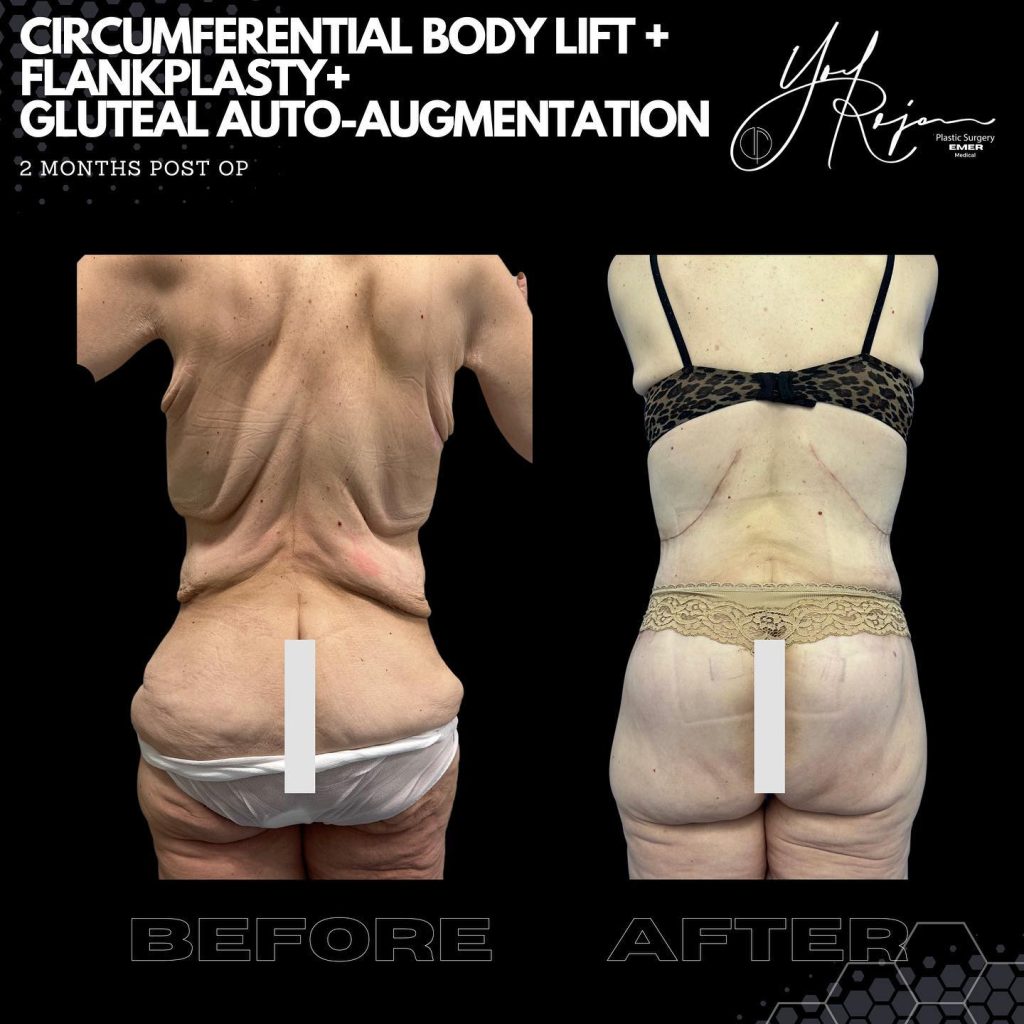
Here’s where a lot of people get surprised. The results immediately after surgery don’t look like the polished afters in the photos. Not even close.
Right out of surgery, you’ll have swelling. Significant swelling. The treated area will likely look puffy, feel tight, and carry bruising that ranges from yellow-green to deep purple depending on your skin tone and how your body responds to trauma. This is completely expected, and it doesn’t mean something went wrong.
You’ll also have surgical drains (in most cases), compression garments, and activity restrictions that make it hard to even get a good look at yourself for the first few weeks. Your posture changes when you’re protecting an incision, and that changes how the result reads visually. The early photos you take of yourself in this stage are genuinely not representative of the final outcome.
Most surgeons will tell you the same thing: the first four to six weeks post-op are about healing, not results. The swelling needs time to resolve, and the skin needs time to contract and conform to its new position.
The Timeline You Actually Need to Know
This is probably the most important section in this entire article, because timeline is where expectations so often go sideways.
Weeks 1 to 3: Swelling peaks, then begins to slowly recede. You’ll likely see the incision lines clearly and the skin around them may look somewhat puckered or uneven. Normal. Don’t panic. Don’t Google your way into anxiety at 2 a.m.
Weeks 4 to 6: Most patients are cleared for light activity and start to feel more like themselves. The silhouette starts to reveal itself a bit more clearly here, though swelling is still present — it’s just deeper and less visible from the outside.
Months 3 to 4: This is when most people start getting genuinely excited about what they see. The swelling has largely resolved, the incisions are starting to soften and fade, and the actual shape of the result becomes apparent. Before-and-after photos taken at this stage look much more like what patients imagined when they first decided to have surgery.
6 months to 1 year: The final result comes into focus. Incision scars continue to mature and fade (though they don’t disappear). The skin settles fully into its repositioned state, and any residual firmness or numbness resolves for most patients. This is when the most accurate comparison to your pre-surgery self can really be made.
There’s a reason the best before-and-after flankplasty photos in clinical portfolios are taken at the six-month or one-year mark. It’s not cherry-picking; it’s accuracy.
What the “After” Actually Looks Like: Region by Region
Let’s get specific, because the changes aren’t uniform across the flank area.
The lateral waist: This is where the most noticeable change typically happens. The outward bulge of the love handle area narrows, and the waist-to-hip ratio often looks more defined from both the front and back. For patients who’ve struggled with this area despite weight loss, the change here can feel transformative.
The lower back: Excess skin along the lower back gets lifted and smoothed. The “roll” that sits above the waistband of pants — that area that’s notoriously resistant to diet and exercise when it’s actually excess skin — is significantly reduced or eliminated.
The hip transition: The curve from hip to waist becomes cleaner. This is especially relevant for patients who’ve had significant weight fluctuation, because that area often loses its natural curve when skin loses its elasticity.
The incision placement: Most flankplasty incisions are designed to sit within or just above the natural waistband line, so they’re hidden under clothing. The scar runs laterally from roughly hip to hip on the sides and back, depending on the extent of the procedure.
What doesn’t change: flankplasty doesn’t address the abdomen unless it’s part of a combined procedure. It also doesn’t specifically target visceral (internal) fat — only the subcutaneous fat and excess skin in the treated region. If there’s significant intra-abdominal volume, the result will be limited accordingly.
What Actually Determines Your Result
Here’s the thing most before-and-after galleries don’t communicate: two people with nearly identical bodies going to the same surgeon can end up with noticeably different outcomes. That’s not a flaw in the system; it’s just biology.
Skin quality and elasticity: This is probably the single biggest variable. Younger patients or those whose skin retained good elasticity tend to heal with less scarring and better skin contraction. Older patients, or those whose skin lost elasticity through rapid weight loss, may find that the remaining skin doesn’t tighten as dramatically.
The amount of tissue removed: More isn’t always better. Surgeons are limited by what can be safely excised while maintaining tissue viability and proper blood supply. A skilled surgeon will take what can be removed safely; an overly aggressive approach risks complications like wound dehiscence or poor scarring.
Weight stability: Patients who are within their goal weight range — and have been stable there for at least six months, ideally longer — see significantly better results than those who are still losing or fluctuating. Weight gain after a flankplasty can stretch the repositioned skin and compromise the result.
Your surgeon’s technique: This matters enormously, and it’s more variable than most people realize. The incision pattern, the amount of tissue undermining, how tension is distributed across the closure — all of these affect how the final scar sits and how the surrounding tissue drapes.
Smoking: If you smoke, your healing will be compromised. This isn’t a lecture; it’s just an honest statement of what the research shows. Nicotine impairs blood flow to the surgical site, slows healing, and increases complication rates. Most board-certified plastic surgeons require patients to stop smoking at least four to six weeks before and after surgery.
The Scar Conversation Nobody Loves Having
Let’s be honest about scars, because the before-and-after photos don’t always show them clearly. Flankplasty leaves a scar. A real one. The length varies depending on the amount of tissue removed, but it’s not a subtle, two-inch line.
In the first few months, the scar will likely be red, raised, and visible. By six months to a year, it typically softens significantly. By the two-year mark, many patients find the scar has faded to a skin-toned or slightly lighter line that’s much less noticeable — especially when it sits under a waistband.
Scar quality is partly genetic. Some people heal with barely-there scars even after significant surgery; others are prone to hypertrophic scarring regardless of how well the wound was closed. Your surgeon can assess your history and give you a realistic expectation based on any scarring patterns you’ve had from past injuries or surgeries.
Silicone sheeting, sun protection, and massage (once cleared by your surgeon) can all help scar maturation along. Products like SilFlex or Mederma Scar Gel aren’t magic, but they’re not nothing either — consistency is what matters with scar management.
Comparing Yourself to Someone Else’s Results: Please Don’t
This might be the most practical advice in this article. The before-and-after flankplasty photos you find online — whether on a surgeon’s website, Instagram, or RealSelf — are not your before-and-after. They can give you a general sense of what the procedure can accomplish, but they can’t tell you what it will accomplish for your specific body.
When you’re consulting with a surgeon, ask to see patients who look like you. Similar starting weight, similar age range, similar skin quality. A surgeon who’s done a hundred of these procedures has a diverse portfolio — there’s no reason you should be making decisions based on a 30-year-old patient with exceptional skin elasticity if you’re 52 and have had two children.
You know what else matters more than the gallery photos? The consultation itself. How clearly does the surgeon explain what’s achievable for your specific anatomy? Do they show you where your incision would sit? Do they point out what they can address and — equally important — what they can’t? A surgeon who’s honest about limitations is more trustworthy than one who only shows you the most dramatic outcomes.
When the Results Aren’t What You Expected
Sometimes the result doesn’t match what you envisioned. That happens, and it doesn’t always mean something went wrong.
Mild asymmetry is common. Swelling doesn’t resolve at the same rate on both sides, and the body doesn’t heal in perfect geometric symmetry. Minor differences between the left and right flank are normal and often self-correct over time.
Residual looseness in areas adjacent to the treated zone can happen if the procedure was limited in scope. If you expected a comprehensive change and only a partial correction was performed, that gap in expectation needs to be addressed with your surgeon.
Revision surgery is an option in some cases. It’s not uncommon, and it’s not a sign of failure. Many patients undergo a small secondary procedure at the one-year mark to refine a scar, address a minor area of residual laxity, or improve symmetry. Board-certified plastic surgeons are generally upfront about the possibility of revision during initial consultations.
If you’re genuinely unhappy with your outcome after the one-year mark, a second opinion from another qualified surgeon is a reasonable step. Not to assign blame, but to understand your options clearly.
A Word on Setting Realistic Expectations Before You Book Anything
Flankplasty before-and-after results can be genuinely impressive. The waist looks more defined, the lower back looks smoother, and clothes fit differently — often better. For patients who’ve done the work of losing significant weight and are left with excess skin that exercise won’t fix, the emotional impact of this procedure can be substantial.
But it’s not a shortcut, and it’s not a guarantee of perfection. The procedure addresses specific anatomical issues within specific anatomical limits. It leaves a scar. It requires a real recovery. And the final result is shaped by factors that are partly in your control and partly just… your biology.
The most satisfied patients tend to be the ones who went in with clear eyes. They understood the timeline, had a frank conversation with a qualified surgeon about their specific starting point, and approached the process with patience. They also stopped comparing their recovery to someone else’s Instagram.
If you’re seriously considering flankplasty, the before-and-after journey starts with an honest consultation — not with a photo gallery. That’s where the realistic version of your outcome actually lives.