You’ve probably heard of a tummy tuck. Maybe even a Brazilian butt lift. But flankplasty? That one tends to stop people mid-scroll. It’s not as loudly marketed, not as often Googled — and yet, for the right patient, it can be the missing piece in a body contouring journey that liposuction alone just couldn’t finish.
So let’s get into it. What is flankplasty, really? Who needs it? And what does the procedure actually involve?
First, a Quick Anatomy Lesson (Bear With Me)
The flanks — sometimes called “love handles” — are the soft tissue areas that wrap around the sides of your torso, roughly between your lower ribs and the top of your hips. They’re the part that hangs over your waistband, the part that shows up in photos when you least expect it, the part that diet and exercise seem to stubbornly ignore.
Here’s why: fat in the flanks tends to be subcutaneous — meaning it sits just under the skin — and the skin in that area is prone to laxity, especially after significant weight loss, pregnancy, or just the natural passage of time. You can lose fifty pounds and still have a soft, loose roll along your sides. That’s not a failure. That’s anatomy.
Flankplasty addresses exactly this. It’s a surgical procedure that removes excess skin and fat from the flank area, tightening the tissue and reshaping the lateral (side) contour of the torso. Think of it as a targeted body lift for the sides of your body.
So What Is Flankplasty, Exactly?
At its core, a flankplasty is a surgical body contouring procedure. The surgeon excises — meaning cuts away — excess skin and underlying fat from the lateral trunk, then pulls the remaining tissue taut and closes the incision. The result is a smoother, more defined flank contour.
The term itself comes from “flank” (the anatomical region) and “plasty” (a Greek suffix meaning surgical repair or reconstruction). So literally: surgical repair of the flank. Not the most glamorous name, but accurate.
What makes flankplasty distinct from, say, a lower body lift or a standard tummy tuck is its specificity. It targets the side of the body — not the front (abdomen), not the back exclusively, but that curved, transitional zone between the two. Some surgeons perform it as a standalone procedure; others combine it with a tummy tuck or back lift as part of a larger circumferential body contouring plan.
Flankplasty vs. Flank Liposuction: They’re Not the Same Thing
This is where a lot of confusion happens, and it’s worth slowing down.
Liposuction removes fat. Full stop. It’s a minimally invasive procedure that uses a thin cannula to suction fat cells out from under the skin. When the skin has good elasticity, this works beautifully — the skin contracts and conforms to the new contour. But when the skin is already loose, stretched, or has lost its elasticity? Liposuction can actually make things look worse. You remove the volume that was filling out the skin, and what’s left is deflated and saggy.
Flankplasty removes fat and skin. That’s the critical difference. It’s not just about reducing volume — it’s about removing the excess tissue itself and physically tightening the skin envelope. For patients dealing with skin laxity (not just fat), this distinction is everything.
Some patients need both: liposuction first to reduce fat volume, followed by flankplasty (sometimes during the same procedure) to address the residual loose skin. Dr. Rojas takes a highly individualized approach to this, assessing each patient’s tissue quality, amount of excess skin, and overall body contouring goals before recommending a surgical plan.
Who Actually Needs a Flankplasty?
Good question — and honestly, not everyone. Flankplasty is not a weight loss procedure, and it’s not a substitute for a healthy lifestyle. The ideal candidate is someone who has already done the hard work and is dealing with results that diet and exercise — or liposuction alone — can’t fix.
Here’s a more specific picture of who tends to benefit most:
People after significant weight loss. Whether through bariatric surgery or lifestyle changes, dramatic weight loss often leaves behind excess skin that simply doesn’t retract. The flanks are a common problem area. If you’ve lost 80, 100, or 150 pounds and still have a persistent roll along your sides, that’s likely loose skin — and flankplasty can address it.
Post-pregnancy patients. Pregnancy stretches skin in ways that don’t always fully recover, and the lateral torso is no exception. Some patients find that even after returning to their pre-pregnancy weight, the sides of their body feel and look different than before.
Patients with good general health and stable weight. This is a surgical procedure, and like any surgery, it carries risks. Candidates should be non-smokers (or willing to quit before and after), at a stable weight they can maintain, and free of conditions that could complicate healing.
People who are realistic about outcomes. A flankplasty creates a scar — typically along the hip or lower back, designed to fall where it can be hidden by underwear or a swimsuit. The results can be dramatic, but scars are permanent. Patients who understand this trade-off and still feel the aesthetic improvement is worth it tend to be the most satisfied.
What about someone who just wants to slim down their sides without significant loose skin? That person might be a better candidate for flank liposuction alone. The right procedure depends entirely on the individual, which is why an in-person consultation matters so much.
What Does the Surgical Process Actually Look Like?
Let’s walk through it — without making it more complicated than it needs to be.
Before surgery: Patients typically have a detailed consultation to discuss goals, review their anatomy, and understand realistic outcomes. Pre-operative instructions usually include stopping certain medications, quitting smoking, arranging for someone to drive them home, and fasting before the procedure.
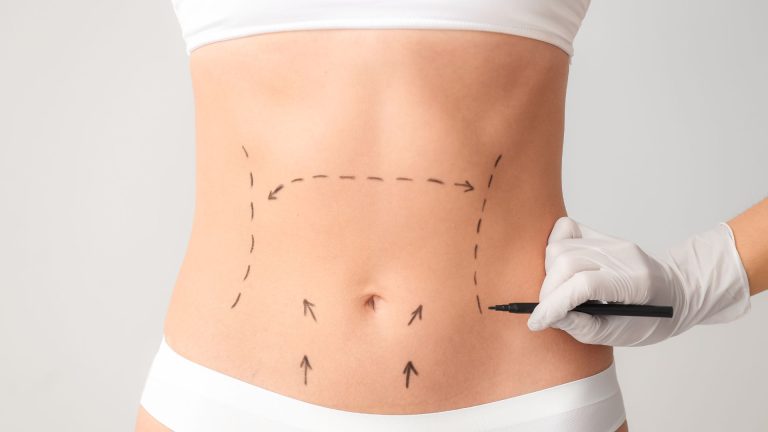
The procedure itself: Flankplasty is performed under general anesthesia. The surgeon marks the incision lines pre-operatively, often while the patient is standing, to account for how the tissue falls naturally. The incision is strategically placed — usually along the hip, curving toward the lower back — to allow for the best possible scar concealment.
From there, the surgeon removes the excess skin and fat, repositions the underlying tissue as needed, and closes the incision in layers. Depending on the extent of the procedure and whether it’s combined with other surgeries, operating time can range from two to four hours, sometimes longer.
Recovery: This is not a quick bounce-back surgery. Most patients spend the first week or two moving carefully, with limited activity. Compression garments are typically worn for several weeks. Swelling and some discomfort are expected — that’s normal, not a red flag. Most people return to desk work within two to three weeks and more strenuous activity after six weeks, though full results take months to reveal themselves as swelling resolves. (For a deeper look at what recovery involves week by week, check out the recovery guide on this site.)
Results: The final contour is usually visible around three to six months post-op, once swelling has fully subsided. Scars continue to fade over time — they’re typically red and raised at first, then gradually soften and flatten over the following year.
Check before and after photos of Flankplsty
Why the Flanks Are Harder to Treat Than People Expect
Here’s something that doesn’t get talked about enough: the flank area is anatomically complex. Unlike the abdomen, which has a relatively consistent tissue structure, the flanks involve a transition zone between the front and back of the body. The skin here experiences tension from multiple directions, and the underlying muscle anatomy plays a role in how the area looks and how it heals.
This is part of why flankplasty requires a surgeon with specific expertise in body contouring — not just someone who performs liposuction. The technical skill involved in excising tissue, managing tension across the incision, and placing the scar in a location that heals well and stays hidden takes experience and precision.
Dr. Rojas has extensive training and clinical experience in body contouring procedures, including flankplasty as both a standalone and combined procedure. Patients who come in after weight loss surgery, in particular, often benefit from his familiarity with the unique tissue characteristics that accompany post-bariatric contouring.
A Few Things Worth Knowing Before You Commit
Flankplasty is a meaningful surgical procedure with real recovery requirements. Before scheduling a consultation, it helps to go in with clear eyes about a few things:
Timing matters. Surgeons typically recommend that patients be at a stable weight for at least six months to a year before proceeding. Operating on someone whose weight is still fluctuating can compromise results.
Combined procedures are common. Flankplasty is often performed alongside a tummy tuck, lower body lift, or back lift as part of a more comprehensive contouring plan. Doing procedures simultaneously can reduce overall recovery time compared to staging them separately — but it also means a longer initial surgery and recovery.
Insurance rarely covers it. Unless there’s a documented medical reason (like skin infections under the excess tissue), flankplasty is typically considered cosmetic and not covered by insurance. Financing options are worth discussing with the practice.
And finally — don’t underestimate the emotional side of this decision. Choosing to have surgery is significant. It’s worth taking your time, asking every question you have, and not feeling rushed into anything. A good consultation should feel like a conversation, not a sales pitch.
Ready to Learn More?
If you’re curious about whether a flankplasty might be right for your situation, the best next step is a personalized consultation with Dr. Rojas. Every body is different, and what works beautifully for one patient may not be the right approach for another. During the consultation, Dr. Rojas will evaluate your anatomy, discuss your goals, and give you an honest assessment of what’s achievable — and what isn’t.
Schedule your consultation today and take the first step toward understanding your options.